
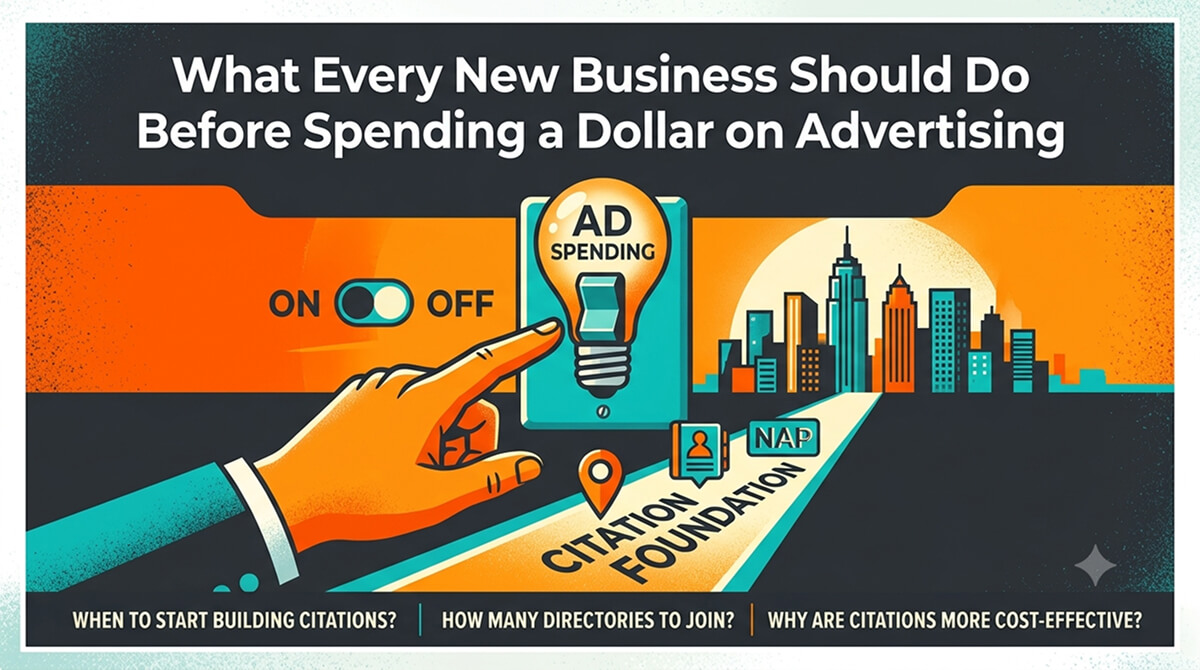
There’s a sequence that a lot of new business owners get backwards. They sign up for social media, run some ads, build a website and skip the step that quietly makes everything else work better. Before you spend money trying to get found, you need to make sure you can actually be found when someone goes looking. That starts with establishing your business citation foundation.
The Problem With Starting With Ads Before Citations
Paid advertising can work. But if someone sees your ad, searches your business name to verify you’re legitimate, and finds almost nothing no directory listings, no map presence, no third-party mentions that doubt costs you the conversion. Ads drive awareness. Your digital footprint determines whether that awareness converts into a call or a visit.
Citations your business name, address, and phone number listed consistently across directories and online platforms are the foundation of that footprint. They confirm to potential customers, and to search engines, that your business is real and operating at the location you claim.
Why New Businesses Have a Citation Gap and Why It Matters
Established businesses tend to accumulate citations naturally over time customers mention them, trade organizations list them, local press covers them. New businesses start with zero. That gap isn’t permanent, but it has to be intentionally closed.
Without citations, a new business looks identical to one that recently closed. Search algorithms can’t tell the difference between a brand-new operation and one that went under six months ago except through the signals that citations provide. Starting your citation foundation early is one of the highest-leverage things a new business can do.
Where to Start and How to Build Correctly From Day One
For a new business, the first several listings matter most: Google Business Profile, Yelp, Apple Maps, Bing Places, and an established local business directory where your target customers search. Getting those right with complete, consistent information gives you a functional baseline that everything else builds on.
bizbuzzzone.com is worth including early if you’re serving a local market and want your business accessible to people searching by category and location. From there, expand into industry-specific directories relevant to your niche. Getting the information right from the start is much easier than correcting errors across dozens of listings later.
Frequently Asked Questions
How soon should a new business start building citations?
As soon as possible ideally the same month you open. The earlier you establish consistent information across directories, the earlier you start building the trust signals that support local visibility. Don't wait until you're busy; build the foundation before you need it most.
Is it necessary to be on every directory, or just a few key ones?
A few quality listings are far better than dozens of careless ones. Focus on platforms with real user bases and legitimate purposes. Ten to twenty solid, accurate listings in your first few months builds a much stronger foundation than rushing to hit one hundred.
Does Google Business Profile count as a citation?
Google Business Profile is your single most important business listing, but it works best as part of a broader citation ecosystem. Think of it as the anchor, with directory citations providing corroborating signals that reinforce what GBP shows to search engines and AI tools.
What information should I keep consistent across all my listings?
Your business name exactly as it appears on your website, your primary phone number, and your full address or service area. These three elements the NAP need to match precisely across every listing you create. Inconsistencies in these three things cause the most problems.
Can citation building help me get found locally faster than paid ads?
Citations don't produce overnight results, but they build compounding value. Paid ads stop working when you stop paying. Citations continue supporting your local presence indefinitely. For long-term local visibility, a solid citation foundation is often more cost-effective than relying on advertising alone.